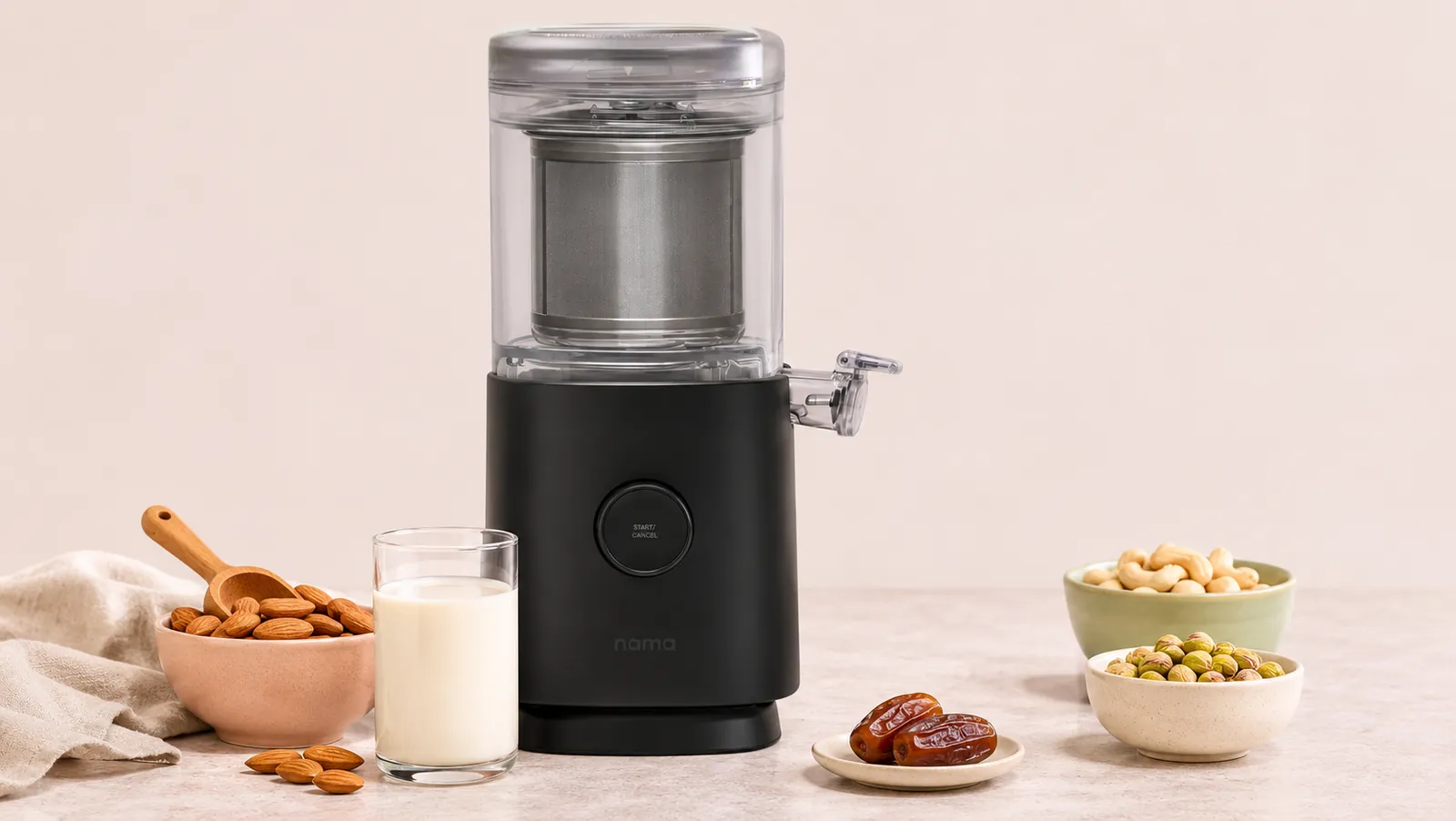

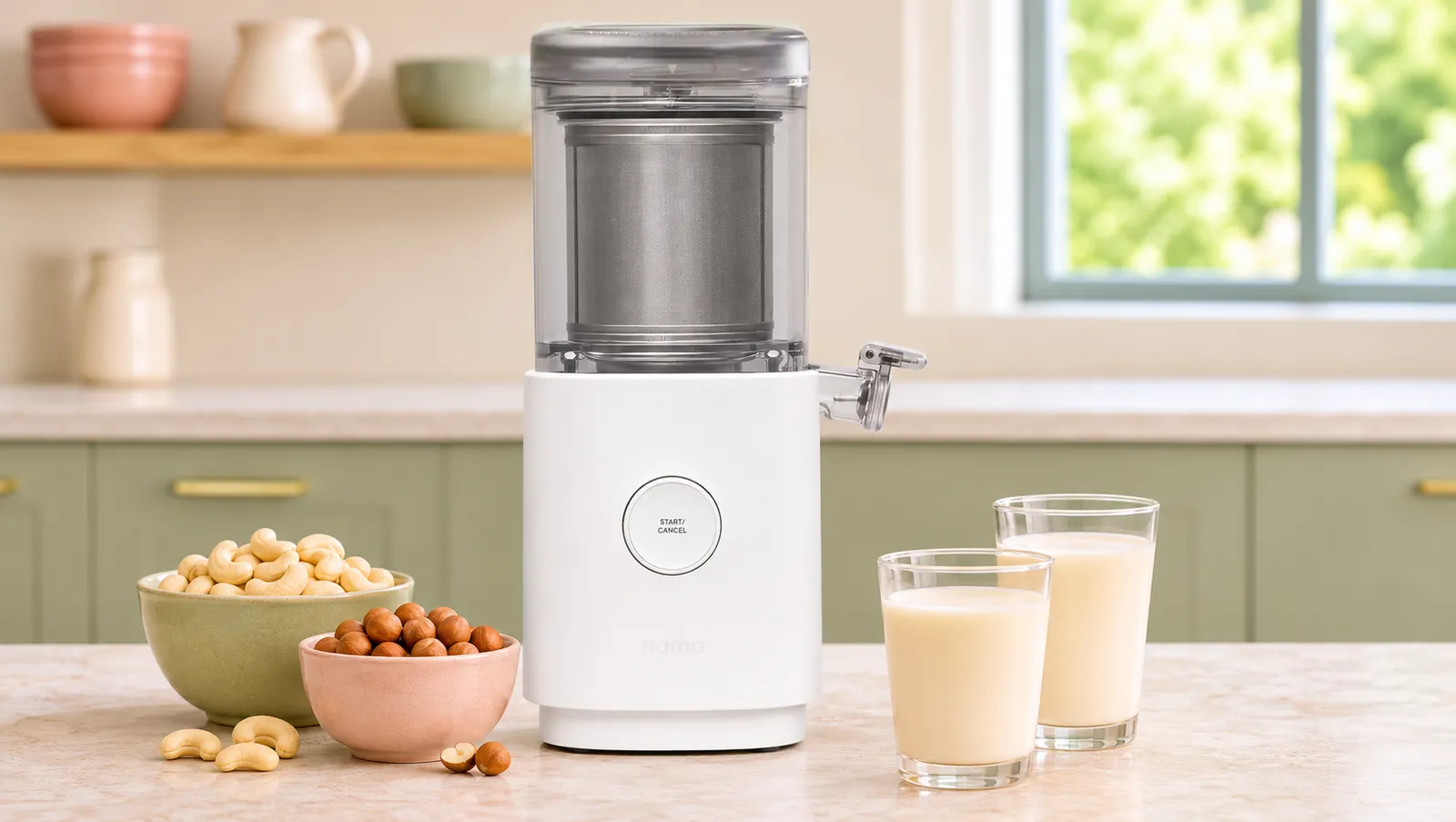
The Almond Cow and the Nama M1 both turn nuts, seeds and oats into plant milk without squeezing a nut milk bag. The Almond Cow makes bigger batches of 5 to 6 cups (1.2 to 1.4 liters), but the milk often needs a second straining for a really smooth glass. The Nama M1 makes about 4 cups (about 1 liter) and finishes every batch with a spin cycle that presses smooth milk out of the pulp, ready to pour.
Two machines come up in almost every conversation about homemade plant milk. They look nothing alike, they cost different amounts, and both promise fresh milk in a minute. If you are trying to choose between them, the useful question is how you actually make milk in your week.
This comparison is for anyone who makes plant milk a few times a week, or wants to, and is ready to retire the nut milk bag.
How Does the Almond Cow Work?
The Almond Cow has a base that you fill with water, up to a MIN or MAX line. Dry ingredients go into a mesh filter basket, up to its
A full batch makes 5 to 6 cups, about 1.2 to 1.4 liters, and the company quotes around a minute of run time. There is also a smaller collector cup for about 2 cups (480 ml) of creamer. To make a second batch, you empty the basket and refill it first.
How Does the Nama M1 Work?
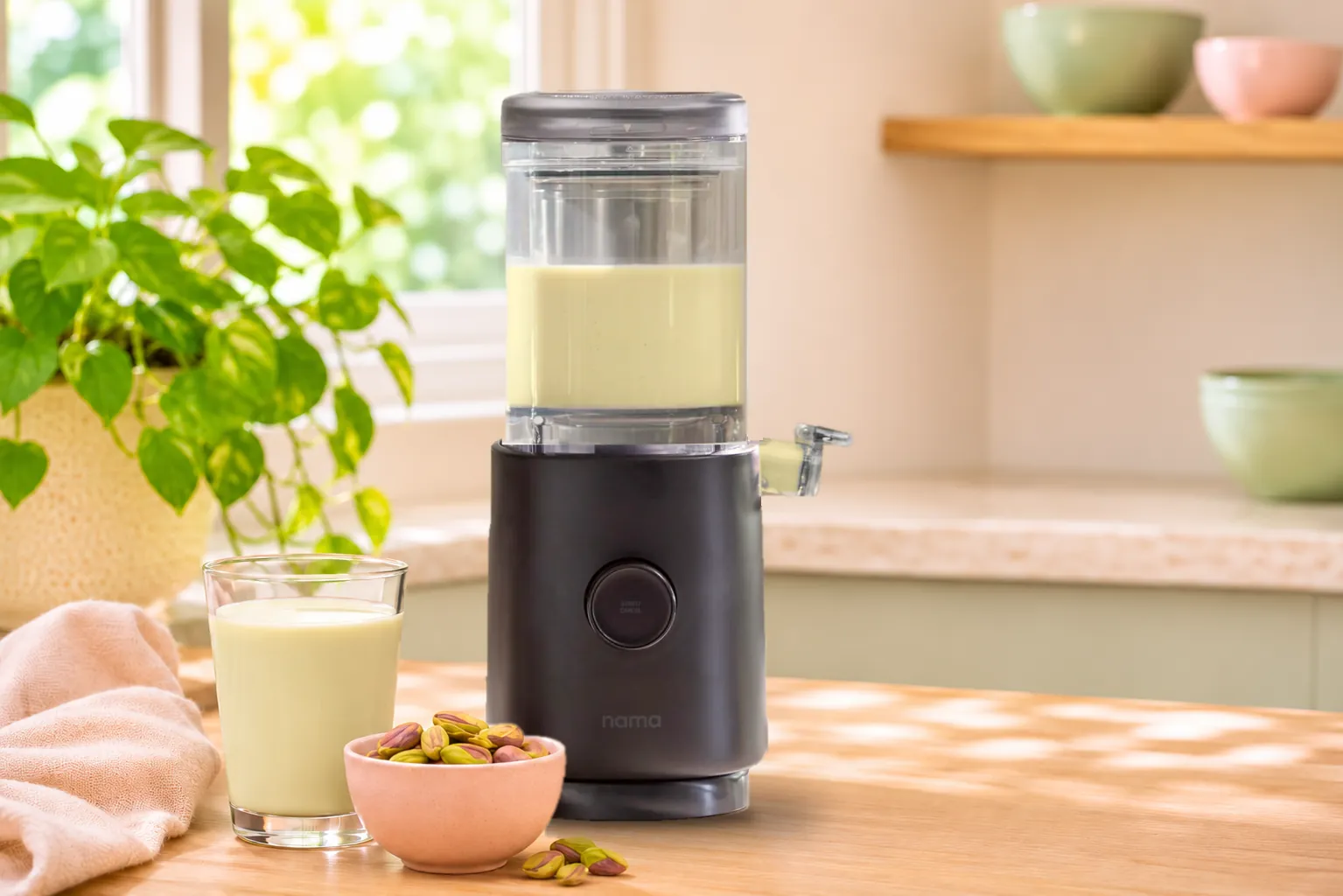
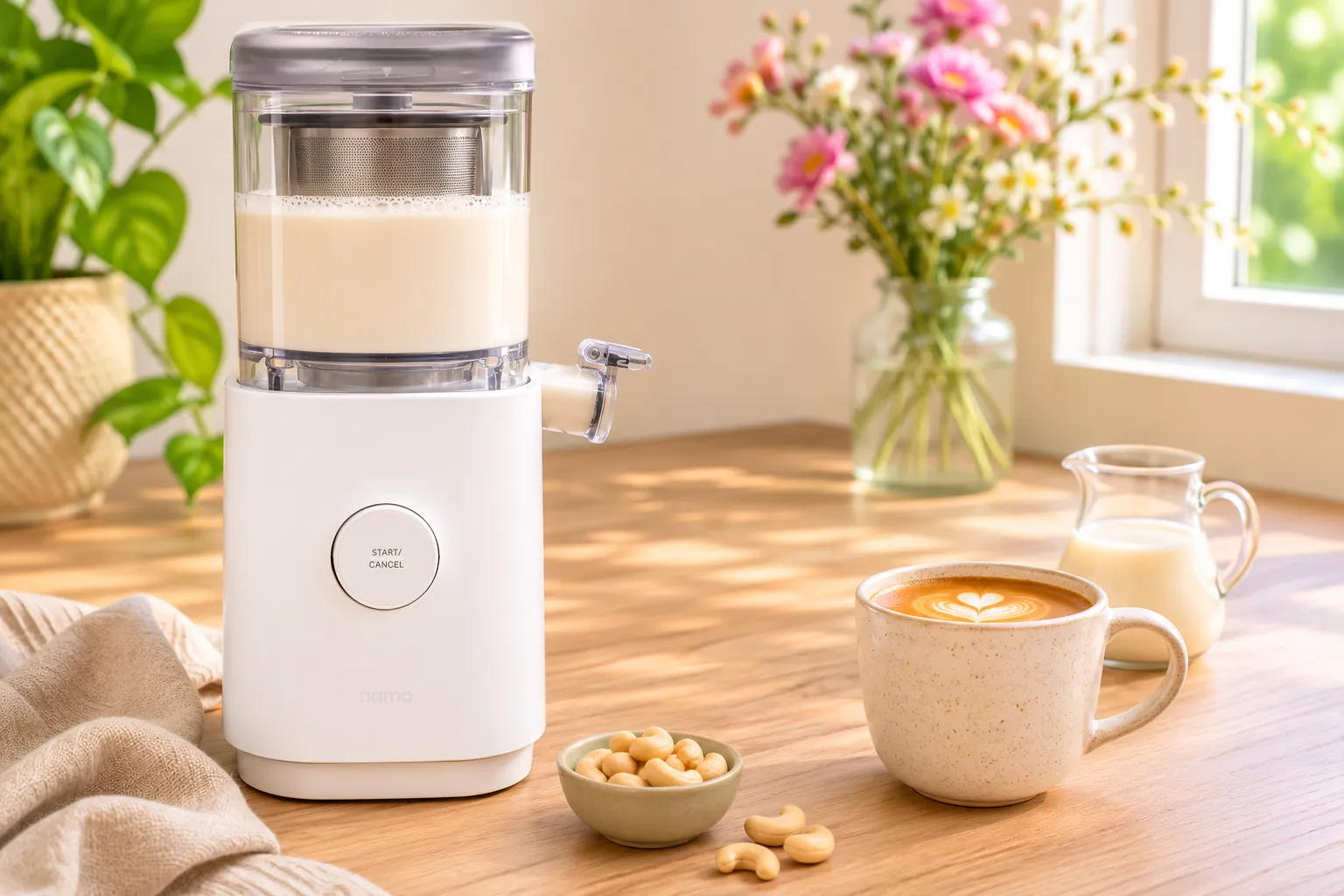
On the Nama M1 everything goes in together. Close the spout cap, put the nuts, water and anything else into the filter basket, secure the lid and set the blending time, usually 1 minute. Press Start. When the machine prompts you, open the spout; after 10 seconds a spin cycle starts and pushes the milk out through the filter, leaving the pulp behind in the basket.
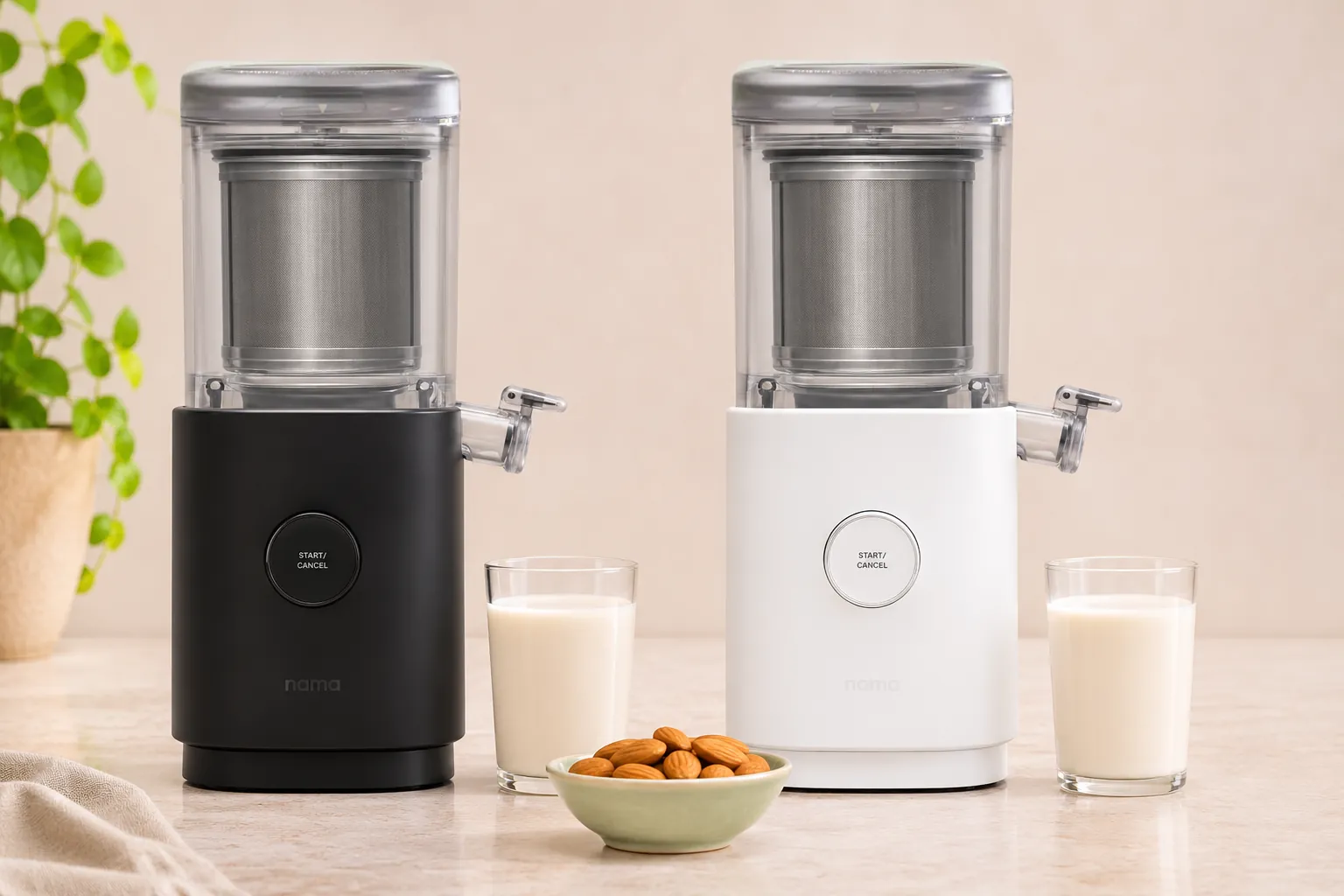
The Nama M1 is a cold press, the only plant milk maker built that way, so the milk is not heated while it is made. A batch makes about 3 to 4 cups (720 to 960 ml). The kit includes the filter basket, the blade frame, a pitcher set and a pulp pouch. It comes in black and in white, with a
Almond Cow vs Nama M1: Side by Side
| Almond Cow | Nama M1 | |
|---|---|---|
| How it works | Blade spins in a mesh basket set in water | Blends in the filter basket, then a spin cycle separates milk and pulp |
| Batch size | 5 to 6 cups (1.2 to 1.4 liters) | 3 to 4 cups (720 to 960 ml) |
| Cold press, no heat | No | Yes |
| Blend time | Automatic cycle, about 1 minute | You set it, usually 1 minute |
| Where the milk ends up | In the base, pour from there | Out of the spout, straight into the pitcher |
| Warranty | Check current terms | 15 years, all parts |
| Price | Lower | Higher, $449 list |
Which One Makes Smoother Milk?
Both strain the milk for you, so both give you milk without the gritty bits you get from a blender and a loose sieve. Where they differ is the finish. The Nama M1's spin cycle is built to pull the milk out of the pulp after blending, the way a salad spinner pulls water off leaves, so the milk runs out of the spout rather than draining from a basket sitting in it.
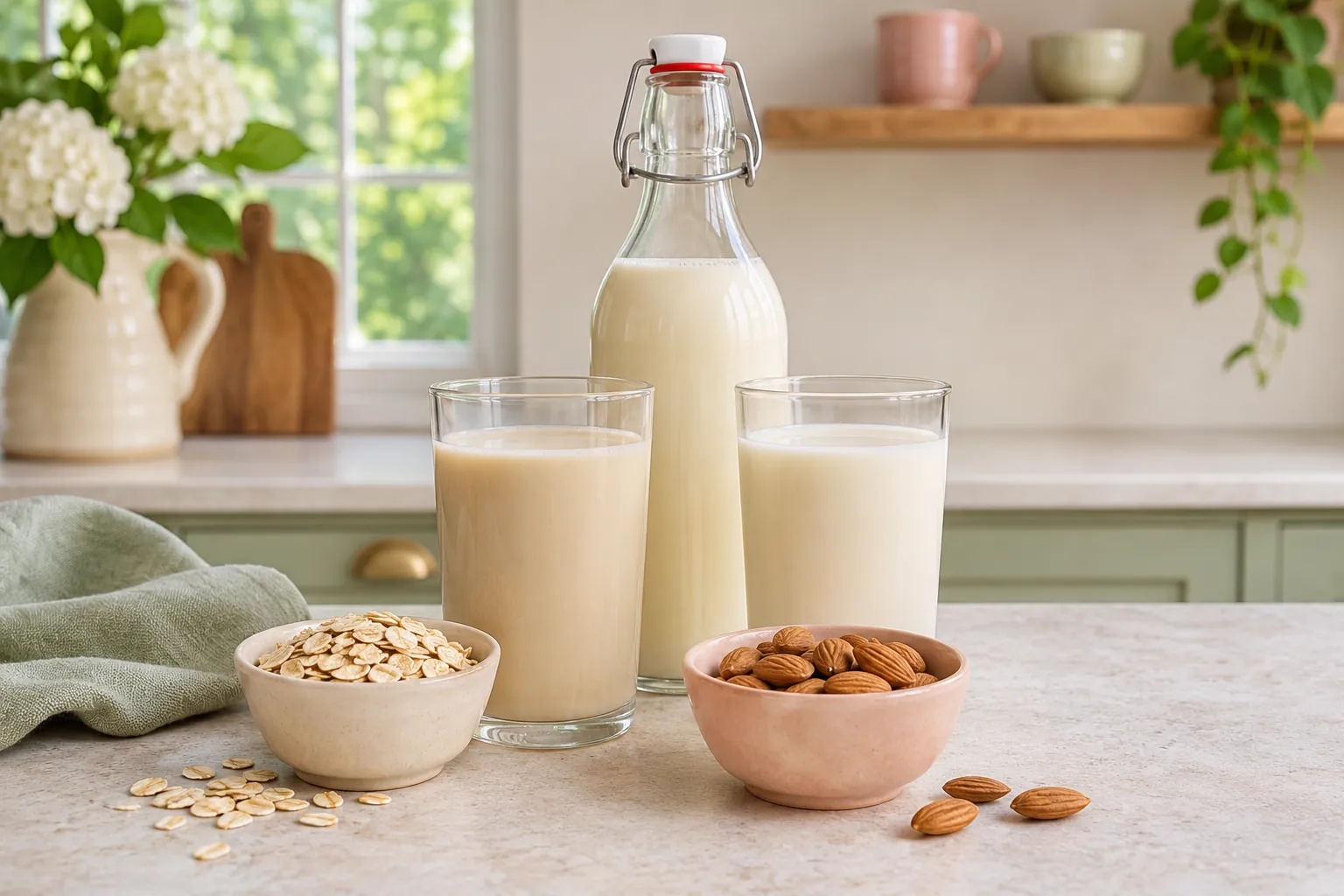
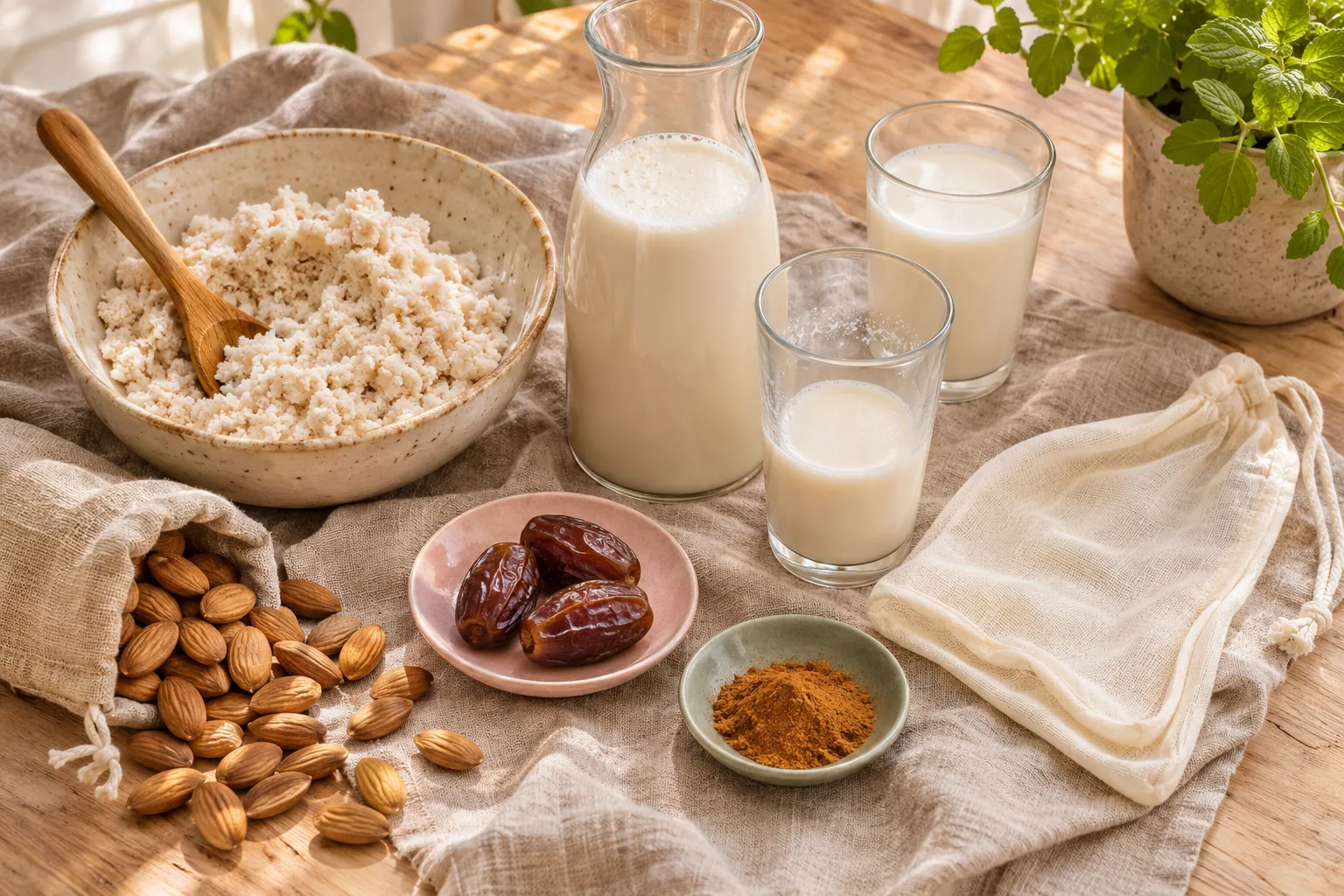
Texture also depends on what you put in. Cashews and macadamias make a silky milk in almost any machine. Almonds and hazelnuts have more skin and fiber, and that is where a good straining step shows. The ratios that work best for each nut are in How to Make Nut Milk at Home: Ratios, Soaking and Storage.
Which Is Easier to Clean?
Both machines clean with a rinse. On the Almond Cow, reviewers note that fitting the basket onto the blade takes a little practice, and the mesh basket rinses and wipes clean. On the Nama M1, the pulp sits in the filter basket after the spin cycle, so you empty it, rinse the basket and lid, and you are done.
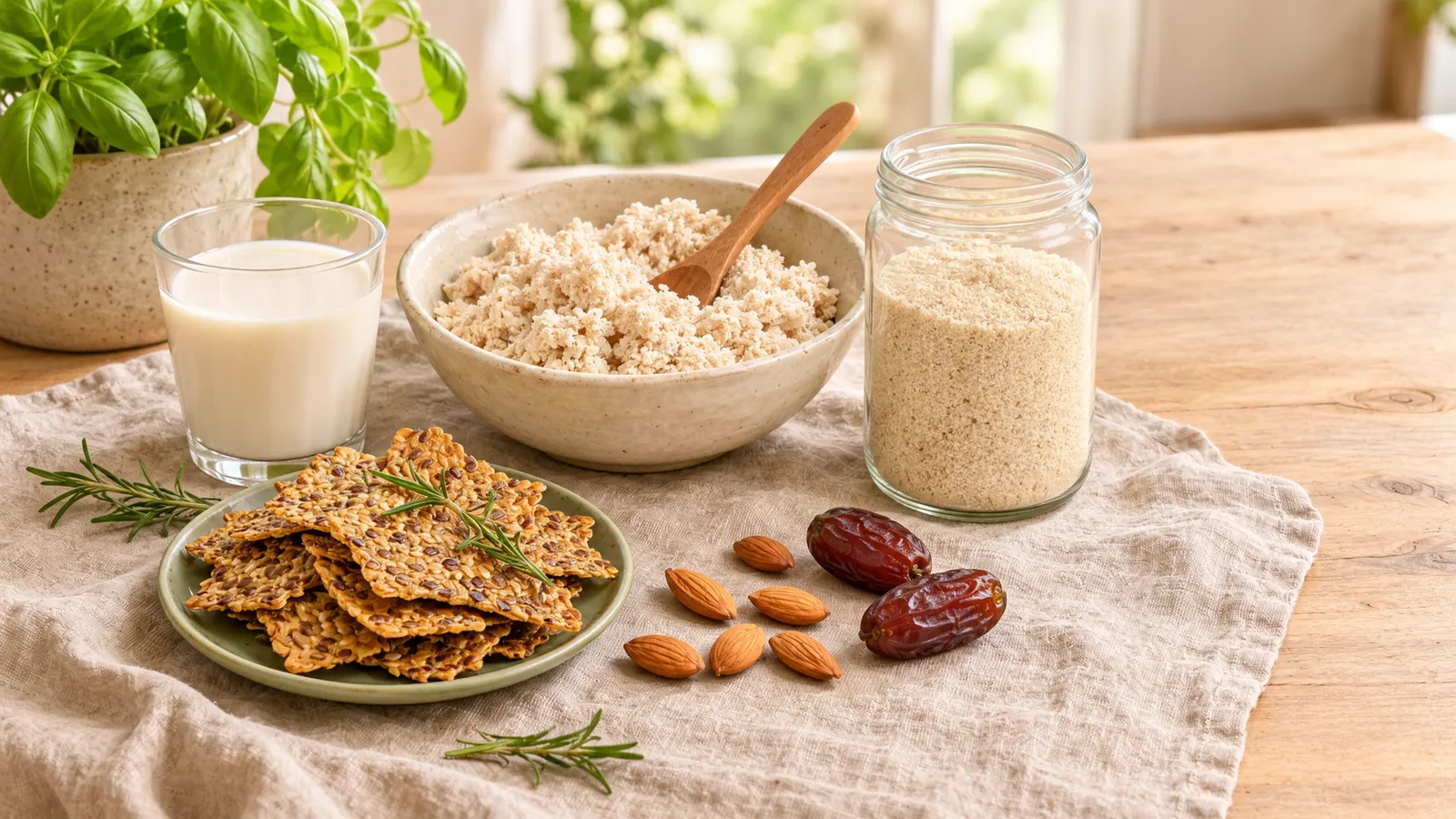
Either way, empty the pulp while it is fresh. It is too good to throw away: it turns into crackers, energy bites and creamy fillings, and the best uses are collected in What to Do With Nut Milk Pulp.
Which Milk Maker Should You Choose?
The Almond Cow suits you if you make milk for a full household in one go, want the biggest batch per run, or want the lower price.
The Nama M1 suits you if you like small, fresh batches every day or two, want to control the blending time for different nuts and seeds, and value a long warranty on a machine you will use for years. It also makes the pulp easy to collect for recipes.
Use discount code PLANTPOWER to save on the
Questions People Ask
Do You Need to Soak Nuts for the Nama M1?
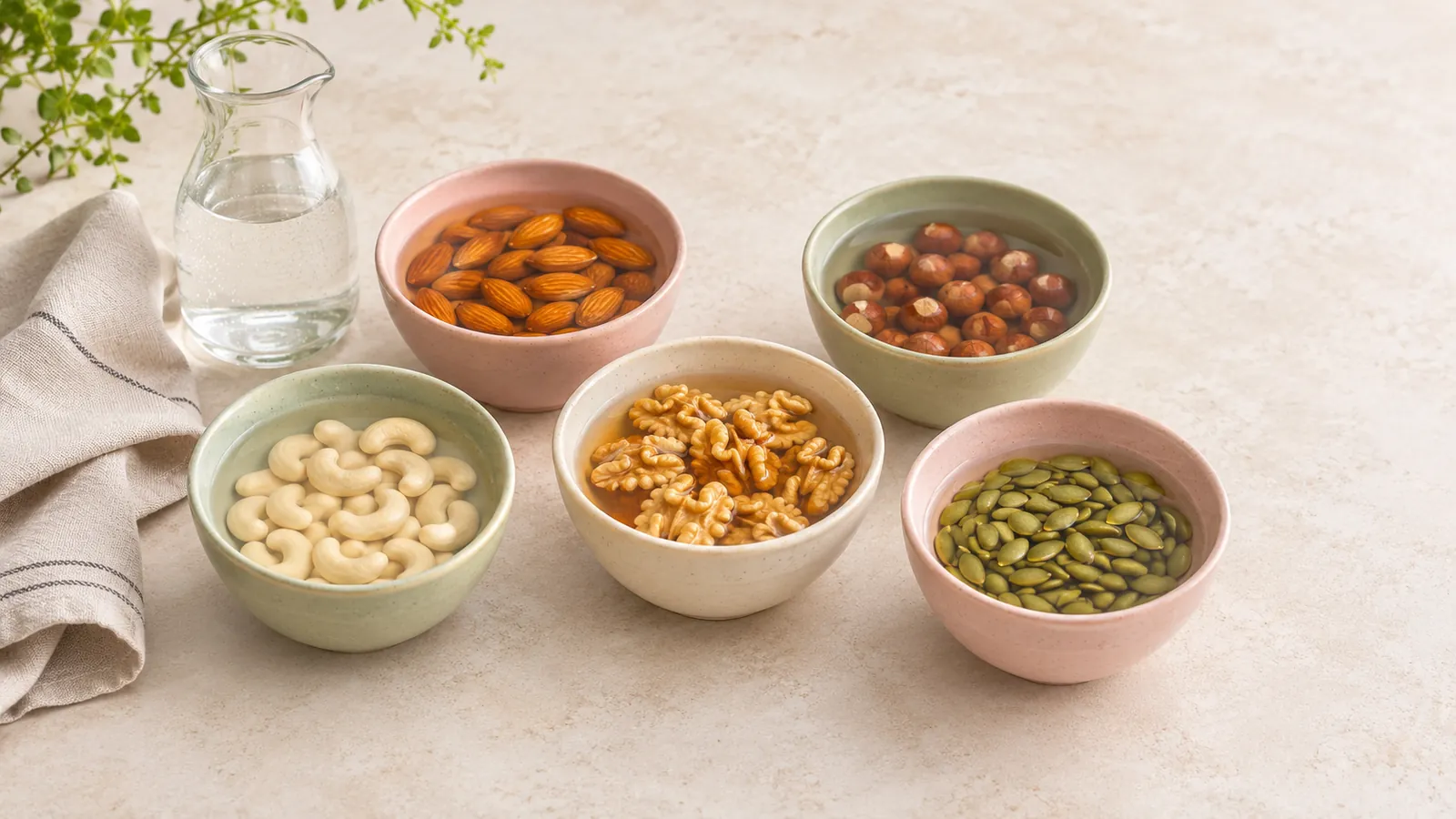
No. The Nama M1 makes smooth milk from nuts straight from the bag. Soaking is optional and mainly softens hard nuts for a regular blender; the details are in Soaking Nuts for Milk: When It Helps and When to Skip It.
How Much Milk Does the Nama M1 Make?
About 3 to 4 cups (720 to 960 ml) per batch, from roughly 1 cup (140 g) of nuts and 3 to 4 cups (720 to 960 ml) of water.
Can Both Machines Make Oat Milk?
Yes. Both handle oats, nuts and seeds. On the Nama M1, oat milk works well with 1 cup (80 g) of oats and 2½ cups (600 ml) of water.
How Long Does the Milk Keep?
Up to 3 days in a sealed bottle in the fridge, whichever machine made it. More in How Long Does Homemade Nut Milk Last?
Two good machines, two different rhythms. Pick the one that matches the way you pour, and fresh milk becomes the easy part of your week.
Comments
Share your thoughts
A tip, a question or how it went for you: every comment helps the next reader too.
No comments yet. Ask your question or share your thoughts.